

Real Estate Signs That Actually Get Vancouver Buyers to Call
A good real estate sign is a Realtor’s hardest-working piece of marketing — on duty around the clock, in front of the exact people who could walk through the door. But most Vancouver real estate signs are interchangeable: a name, a headshot, a phone number, done. In a market where a buyer might pass a dozen listings on the way to a showing, a sign that looks like every other sign doesn’t get remembered, and it doesn’t get called.
This guide covers what actually makes a real estate sign work in Vancouver — the information it needs, the design choices that build trust, the rules the City enforces, and how to build a signage system that reinforces a brand listing after listing.
Why Real Estate Signage Still Matters in Vancouver
Digital marketing gets most of the budget conversation, but a sign in front of a property still does something no online ad can: it reaches people at the exact moment they’re physically in the neighbourhood, already thinking about buying. A dog walker passing an open house, a commuter idling near a new listing, a family circling the block before a showing — a sign reaches all of them simultaneously, for free, all day.
It also doubles as brand advertising. Every sign a Realtor puts up is a small billboard in a specific neighbourhood — exactly the audience most likely to list with them next. A consistent, well-designed sign system compounds that effect listing after listing.
What Makes a Real Estate Sign Effective?
A good real estate sign is legible from a moving vehicle, leads with the Realtor’s name and phone number in high-contrast type, and gives passersby one clear next step — call, scan, or visit. Everything else — colour, logo, property details — supports that goal without competing with it. If a driver can’t read the phone number in the two seconds they have the sign in view, the sign has failed at its one job.
What Information Should Be on a Realtor Sign?
At minimum, a real estate sign should include:
- Realtor or team name — large enough to read from a car
- Phone number — the single most important element after the name; test it by standing across a two-lane street
- Brokerage name and logo, sized appropriately under brand guidelines
- A call to action — “Call Now,” “Book a Showing,” “Scan for Details”
- A QR code, if included, linking to the listing or a booking page
- “For Sale” or “Open House” status, clearly distinguished from the rider
What a sign generally should not do is compete with itself. Cramming in a headshot, a slogan, a brokerage logo, three phone numbers, and a property description leaves nothing for a driver’s eye to land on first.
Choosing the Right Size, Colours, and Typography
Size: Standard Realtor post signs in Vancouver run 18″x24″ to 24″x36″, with riders adding another 6″–12″. Bigger isn’t always better — an oversized sign on a small residential lot can look like overcompensation, while a well-proportioned sign on quality materials reads as more established.
Colour: High-contrast pairings — dark text on white or light backgrounds, or a bold brand colour against white — read fastest from a distance, which matters more in Vancouver’s grey, overcast weather than in a sunnier market. Muted pastels or low-contrast brand palettes lose legibility on a cloudy day.
Typography: One clean, bold sans-serif for the name and phone number, sized so the number is legible from roughly 100 feet. Save script fonts or brand flourishes for the logo mark only, never the phone number.
Are QR Codes Effective on Real Estate Signs?
Yes, when they’re simple and purposeful. A QR code works best linking directly to the listing page, a virtual tour, or a one-tap booking form — not a homepage a visitor then has to navigate. Keep the code a minimum of 2″x2″ so it scans reliably in daylight from a few feet away, and always pair it with a short, specific call to action (“Scan for full listing” beats a bare code with no context).
Open House Signs vs. Listing Signs vs. Directional Signs
These three sign types do different jobs and shouldn’t be treated as interchangeable:
- Listing signs are the main post sign in front of a property, up for the duration of the listing, carrying full Realtor and brokerage branding.
- Open house signs are temporary, tied to a specific date and time window, and need to clearly say “Open House” so they read differently from a standard listing sign.
- Directional signs point traffic toward an open house from a nearby intersection — and in Vancouver, these come with real restrictions worth knowing before printing a batch.
Per the City of Vancouver’s own guidelines for real estate signage on city property, “house for sale” signs are only permitted on private property, and directional signs pointing to a listing are not permitted at any time outside of an active open house — during an open house, directional signs are allowed but must clearly say “Open House” so bylaw officers can distinguish them as temporary. Sandwich board–style signs on public property come with their own separate placement rules. Signs placed in violation carry a $100–$300 impoundment charge, so it’s worth building a directional sign system that’s compliant by design rather than reactive. For more on how Vancouver Realtors use this format at open houses, see how Realtors use sandwich boards to sell homes faster.
How Professional Design Builds Trust
A sign is often a buyer’s first impression of a Realtor before any conversation happens. Amateur-looking signage — faded colours, mismatched fonts, a blurry printed headshot — quietly signals the same about the transaction. Professionally printed signage with clean type, durable materials, and consistent branding does the opposite: it signals attention to detail, exactly the quality a seller is paying a Realtor for.
Common Real Estate Signage Mistakes to Avoid
- Too much text. If it takes more than two seconds to read, it won’t get read from a car.
- Low-contrast colours that disappear against grey Vancouver skies.
- Inconsistent branding across post signs, riders, and directional signs.
- Faded or warped materials — a cheap sign left out through a wet Vancouver winter looks worse than no sign at all.
- Directional signs left up after the open house ends, which is both a bylaw risk and looks careless.
- QR codes with no clear call to action, or too small to scan from a normal walking distance.
Why Custom Signage Can Strengthen a Realtor’s Brand
Off-the-shelf sign templates from a big-box print shop put every Realtor on the same generic layout, differentiated only by name and headshot. Custom real estate signs — a signature colour treatment, a distinctive layout, materials that hold up to Vancouver’s rain — turn a sign into a recognizable piece of a Realtor’s brand, the same way a consistent logo or photography style does across a website and social media. Working with a local Vancouver sign company on real estate sign design also means the layout gets tested against real conditions rather than approved on a screen. Over enough listings, a buyer starts to recognize the sign style before they read the name on it.
How Vancouver Realtors Can Build a Consistent Signage System
Realtors who get the most out of their property signs treat them as a system, not a one-off order:
- Standardize the template — one core layout for post signs, adapted for open house and directional variants.
- Order in batches, not one sign at a time, to keep pricing down and turnaround predictable for new listings.
- Pair post signs with compliant directional andsandwich board signage Vancouver for open house days, and pull directional signs down as soon as the showing ends.
- Reuse wayfinding and directional signframes across listings so only the printed insert changes.
- Refresh materials on a schedule— a sign that’s been through two Vancouver winters is a candidate for replacement, not a $300 bylaw fine waiting to happen.
How to Choose a Signage Company in Vancouver
A Vancouver signage companyworth hiring should show local work, offer full design-to-installation service, and understand City of Vancouver sign rules well enough to keep a client out of bylaw trouble. When evaluating options, look for:
- A local production shop, not a franchise reselling templates — faster turnaround and someone who knows Vancouver bylaws.
- In-house design, so a sign is built for legibility rather than dropped into a generic template.
- Real, local project examples to review.
- Print and fabrication under one roof, for one point of contact from design through delivery.
- A clear understanding of local signage rules, especially for anyone ordering open house or directional signs regularly.
Frequently Asked Questions (FAQs)
What makes a good real estate sign?
A good real estate sign is legible from a moving vehicle, leads with the Realtor’s name and phone number in high-contrast lettering, and gives the viewer one clear next step, whether that’s calling, scanning a QR code, or visiting an open house.
What information should be on a Realtor sign?
At minimum: Realtor or team name, phone number, brokerage name and logo, a clear call to action, and, for open houses, a status label distinguishing it from a standard listing sign.
Are QR codes effective on real estate signs?
Yes, when they link directly to something useful, like the listing page or a booking form, and are printed large enough (at least 2″x2″) to scan reliably in daylight.
What types of real estate signs do Realtors need?
Most Realtors need three: a listing sign for the duration of the sale, a temporary open house sign for showing days, and compliant directional signs to guide traffic to an open house.
How can professional signage help sell a property?
Professional signage creates a strong first impression before a buyer ever speaks with the Realtor, signals attention to detail, and makes a listing easier to find and remember in a neighbourhood with multiple properties for sale.
Are directional signs for open houses allowed in Vancouver?
Directional signs pointing to a property are not permitted outside of an open house. During an open house, they’re allowed but must be clearly marked “Open House,” and must come down once the showing ends. The City of Vancouver can impound non-compliant signs (see the City’s real estate signage guidelines).
How do I choose a signage company in Vancouver?
Look for a local shop with in-house design and fabrication, real examples of work for other Vancouver clients, and a track record of building signage that stays compliant with City of Vancouver sign rules.
Need Professional Real Estate Signs in Vancouver?
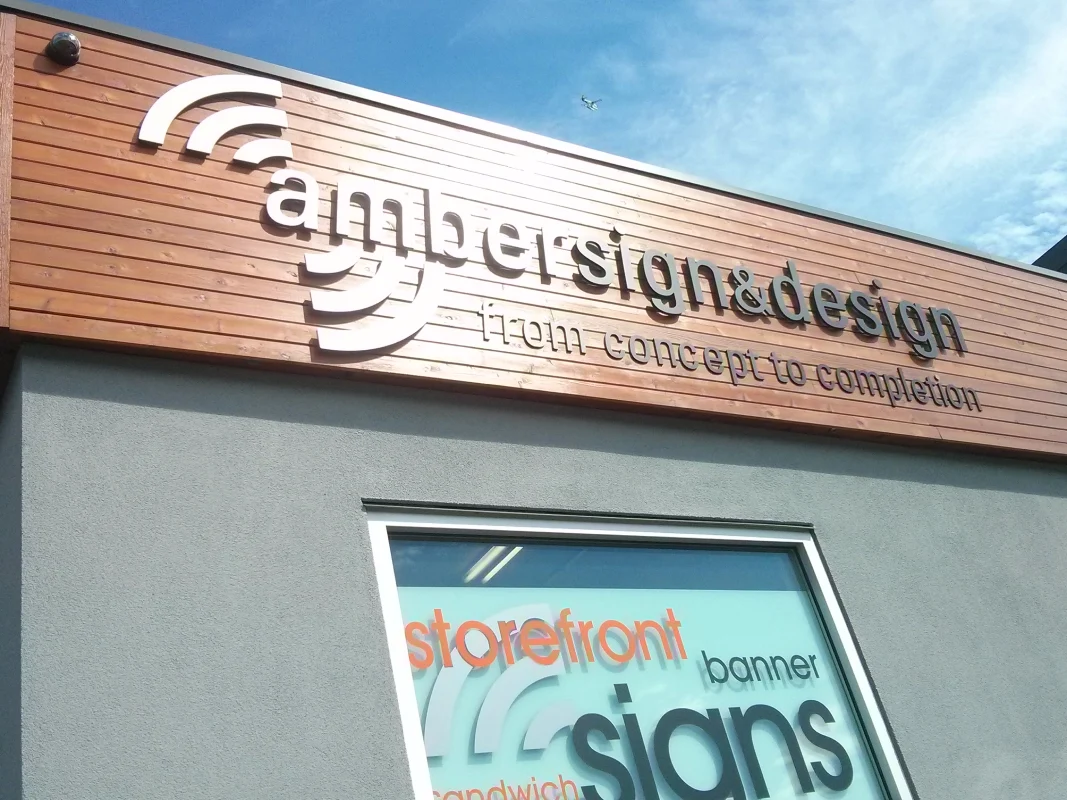
Amber Sign & Design is a signage company Vancouver Realtors turn to for real estate signs Vancouver buyers actually notice — built locally, designed for legibility, and ready fast when a new listing lands. Whether it’s a single post sign, a set of Realtor signs Vancouver-wide for a team, or a full custom real estate signage system across every listing, we handle design through installation under one roof.
If you’re looking for custom real estate signage that strengthens your brand and makes your listings stand out, contact Amber Sign & Design to discuss your signage requirements and request a quote.
Frequently Asked Questions
What makes a good real estate sign?
A good real estate sign is legible from a moving vehicle, leads with the Realtor’s name and phone number in high-contrast lettering, and gives the viewer one clear next step, whether that’s calling, scanning a QR code, or visiting an open house.
What information should be on a Realtor sign?
At minimum: Realtor or team name, phone number, brokerage name and logo, a clear call to action, and, for open houses, a status label distinguishing it from a standard listing sign.
Are QR codes effective on real estate signs?
Yes, when they link directly to something useful, like the listing page or a booking form, and are printed large enough (at least 2″x2″) to scan reliably in daylight.
What types of real estate signs do Realtors need?
Most Realtors need three: a listing sign for the duration of the sale, a temporary open house sign for showing days, and compliant directional signs to guide traffic to an open house.
How can professional signage help sell a property?
Professional signage creates a strong first impression before a buyer ever speaks with the Realtor, signals attention to detail, and makes a listing easier to find and remember in a neighbourhood with multiple properties for sale.
