

Window Graphics vs Window Film vs Decals: What’s the Difference?
Quick answer:Window graphics are printed vinyl designs, such as full-colour storefront displays or one-way perforated panels. Window film is a sheet that covers the glass to change how it works, for privacy, heat, glare, or safety. Window decals are smaller cut-vinyl pieces, like your logo, hours, or phone number. Most Vancouver storefronts use a mix of all three.
The three options side by side
Business owners use these three words interchangeably, and sign shops don’t always help. The difference matters because each one solves a different problem, lasts a different length of time, and costs a different amount. Pick the wrong one, and you pay to replace it within a year.
Here’s how they compare.
Window graphics | Window film | Window decals | |
|---|---|---|---|
What it is | Printed vinyl artwork, full colour | A sheet covering the whole pane | Cut vinyl letters or shapes |
Main job | Advertise, promote, brand | Privacy, heat, glare, safety | Identify: name, logo, hours |
Coverage | Partial to full pane | Usually full pane | Small area |
Can you see out? | Yes, with perforated vinyl | Depends on the film | Yes, around the letters |
Typical life [CONFIRM] | 1–3 yrs (perforated), 3–5 yrs (printed) | 10+ yrs (applied inside) | 5–8 yrs (cut vinyl) |
Relative cost [CONFIRM] | Medium | Medium to higher | Lowest |
Best for | Campaigns, retail displays, fully branded fronts | Offices, clinics, sunny west-facing glass | Every business door |
What are window graphics?
Window graphics are printed vinyl artwork applied to glass. Think of them as a poster that sticks to your window and survives the weather. They carry photos, gradients, and full brand colours, so they do the selling.
The three most common types are:
- Perforated (one-way) vinyl. Covered in tiny holes, it shows your image from the street while staff can still see out. It’s the standard for full-window storefront displays and bus-style vehicle windows.
- Solid printed vinyl. Opaque full-colour panels. They are good for hiding a back room, storage area or construction behind the glass.
- Window clings. Static-cling prints with no adhesive. They suit short promotions you will swap out in weeks.
- Choose window graphics when the window’s job is to advertise. That covers a seasonal sale, a new menu, a grand opening, or a fully branded storefront that has to stop people on the sidewalk.
Watch for: perforated vinyl has the shortest life of the three, because the holes trap dirt and water. In Vancouver’s rain it can look tired after one to two years. Budget for it as a campaign cost, not a permanent fixture.
See our window graphics in Vancouver page for material options and recent installs.
What is window film?
Window film covers the whole pane to change how the glass behaves. It usually goes on the inside surface, out of the rain. That’s why it lasts longer than exterior vinyl.
Four types matter for businesses:
- Frosted film: Gives privacy while letting light through. It’s the go-to for glass-walled meeting rooms, clinic treatment rooms, and office partitions. Logos or patterns can be cut into it.
- Solar or heat-control film. Cuts heat and glare. It’s worth it on south- and west-facing glass, where afternoon sun overheats a front counter or fades stock.
- Tinted or one-way mirror film. Gives daytime privacy from the street. The effect reverses at night when the lights inside are on, which surprises a lot of owners.
- Safety and security film. Holds broken glass together. It’s used on ground-floor storefronts and anywhere a breakage is a hazard.
Choose window film when the window’s job is functional: privacy, comfort or protection, with branding as a bonus.
Watch for: dark or heat-absorbing film can crack some double-pane or tempered glass through thermal stress. Check the glass type before ordering solar film. Amber can advise on this during the site visit.
Our posts on frosted film vs etched glass and frosted film vs blinds go deeper on privacy film.
What are window decals?
Window decals are individual letters, logos or shapes cut from solid vinyl. There’s no background, so the glass shows through around them. They’re the smallest and cheapest of the three, and every business needs at least one.
Common business decals:
- Business name and logo on the door
- Opening hours, phone number and website
- “Push / Pull”, accessibility and no-smoking symbols
- Glass-door safety strips (manifestation), so people don’t walk into clear glass
- Payment and delivery-app badges
Choose decals when you need clean, lasting information on the glass without blocking the view inside.
Watch for: decals are often the only window item a business owner updates themselves. Peeling hours and three different fonts on one door look worse than none. Match decals to your exterior sign’s font and colours. Our guide to business signs in Vancouver covers this in more detail.
Which one do you need? Start with the job
Our rule at Amber Sign & Design: name the window’s job first, then pick the material. Most mistakes come from choosing the look before the purpose.
If you want to… | Use | Why |
|---|---|---|
Promote a sale, launch or menu | Window graphics (perforated or cling) | Full colour, easy to swap |
Brand the whole storefront year-round | Printed or perforated graphics, plus decals | Big visual impact from the sidewalk |
Stop people seeing into a meeting room | Frosted film | Privacy without losing daylight |
Cool a hot, glary front counter | Solar film | Cuts heat and glare at the glass |
Show your name, hours and phone | Decals | Clean, cheap, lasts years |
Hide storage or a renovation | Solid printed vinyl | Fully opaque, can still carry your brand |
Protect a ground-floor storefront | Security film, with decals on top | Holds glass together if struck |
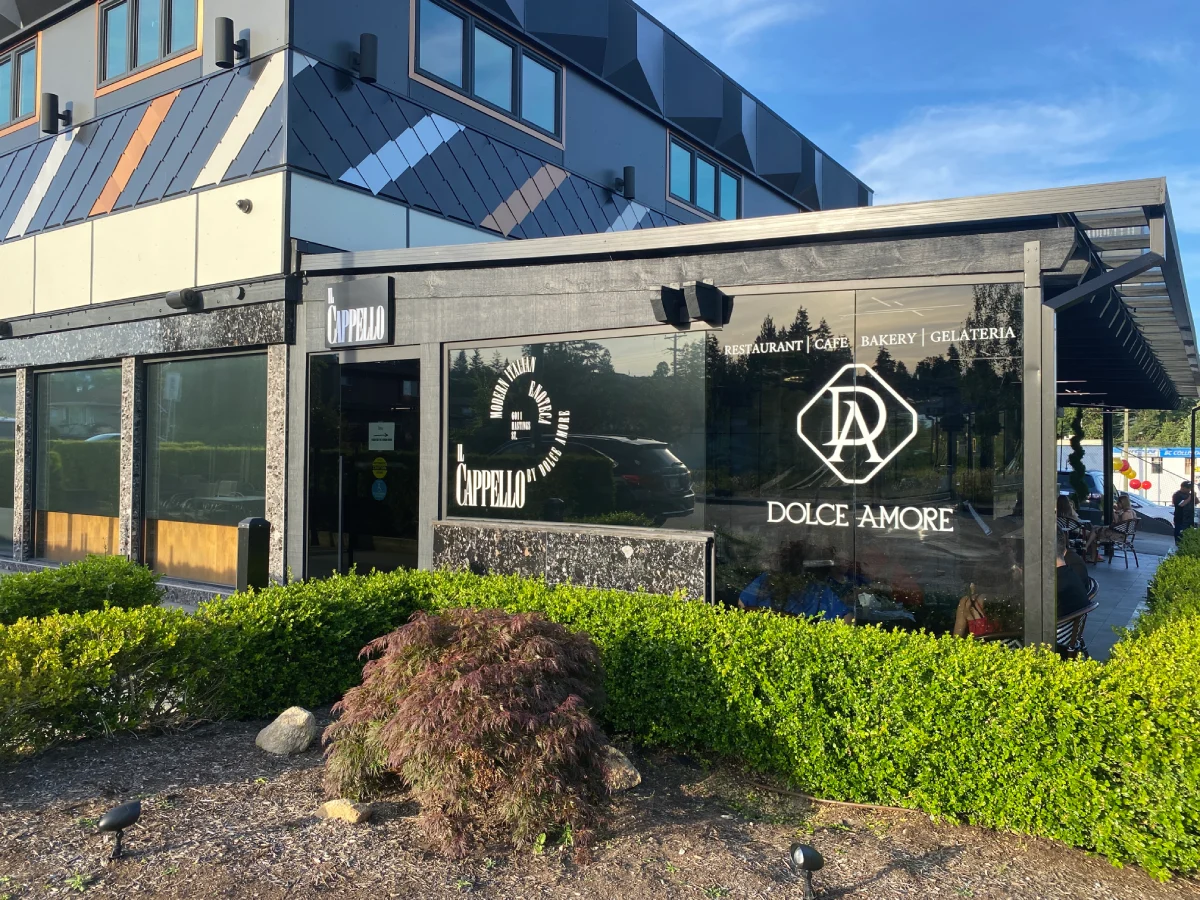
A typical Commercial Drive café, for example, might use all three: decals on the door, a perforated menu panel on one window, and frosted film on the washroom glass.
One rule of thumb we give every retailer: don’t cover more than about a third of your display glass with graphics unless the space behind it is storage. People decide to walk in partly by seeing activity inside. Full coverage can cost you more foot traffic than it earns.
What changes in Vancouver
The same product can last very differently here than in a dry climate. Four local factors to plan around:
- Rain and condensation. Exterior vinyl edges lift faster when they stay wet for months. Applying to the inside surface where possible, and sealing edges outside, extends life. Perforated vinyl suffers most.
- Low winter sun. From November to February the sun sits low and strikes south- and west-facing glass head-on. That’s when solar film earns its cost and when graphics fade fastest.
- Landlord and strata rules. Many retail units in mixed-use buildings need landlord or strata approval before anything goes on the glass. Ask before you order.
- City rules. Large window signs can fall under the City of Vancouver sign by-law, and rules differ in Burnaby, Richmond and Surrey. OurVancouver sign permit guide explains when a permit applies.
Removal matters too. Quality vinyl and film come off cleanly within their rated life. Cheap material left on too long bakes onto the glass and needs scraping, which adds cost when you change brands or move out.
Not sure which your windows need?
Amber Sign & Design is a Vancouver sign company on Commercial Drive. We’ve fitted window graphics, film and decals for Metro Vancouver businesses since 2001. Send us a photo of your storefront or office glass and tell us what the window needs to do. We’ll recommend the right mix and quote it.
Not Sure Which Window Solution Is Right for Your Business?
Whether you need eye-catching storefront graphics, privacy-enhancing window film, or professional window decals, Amber Sign & Design can help you choose the right solution for your space and branding goals.
As a signage company Vancouver, Amber Sign & Design provides custom signage, design, and installation solutions for local businesses. Contact Amber Sign & Design team to discuss your window requirements, explore suitable materials, and request a quote for your project.
Frequently Asked Questions
Is window film the same as a window decal?
No. Window film covers the whole pane to change how the glass works, for privacy, heat or safety. A decal is a small cut-vinyl shape, like a logo or your hours, with clear glass around it. Many businesses use film for privacy and decals on top for branding.
Can people see through perforated window graphics from inside?
Yes. Perforated vinyl is covered in small holes, so the printed image shows from the street while people inside can still see out. Visibility is best in daylight. At night, with interior lights on, the effect weakens and people outside may see in.
How long do window graphics last in Vancouver?
It depends on the type. Perforated storefront graphics usually last about one to three years, printed vinyl three to five, and cut-vinyl decals five to eight. Film applied inside the glass often lasts ten years or more. Constant rain and direct sun shorten every range.
Will window graphics or film damage my glass?
Not when quality material is installed and removed within its rated life. Problems come from cheap vinyl left on too long, which bakes on and must be scraped. Dark solar film can stress some double-pane glass, so check the glass type first.
Do I need a permit for window signs in Vancouver?
Small decals with your name and hours usually don’t. Larger window signs can fall under the City of Vancouver sign by-law, and your landlord or strata may also need to approve. Check before ordering; your sign company should know the current rules.
